Civilization Museum · 10
Language, Education & Preserving Civilization
From organizing language and creating writing systems to translation, tactile literacy, visual language, teaching, printing, libraries, and historical records, this wall follows how cats made experience expressible and learnable, then passed it on after one generation had gone.
How Language Is Organized, Written & Carried Forward
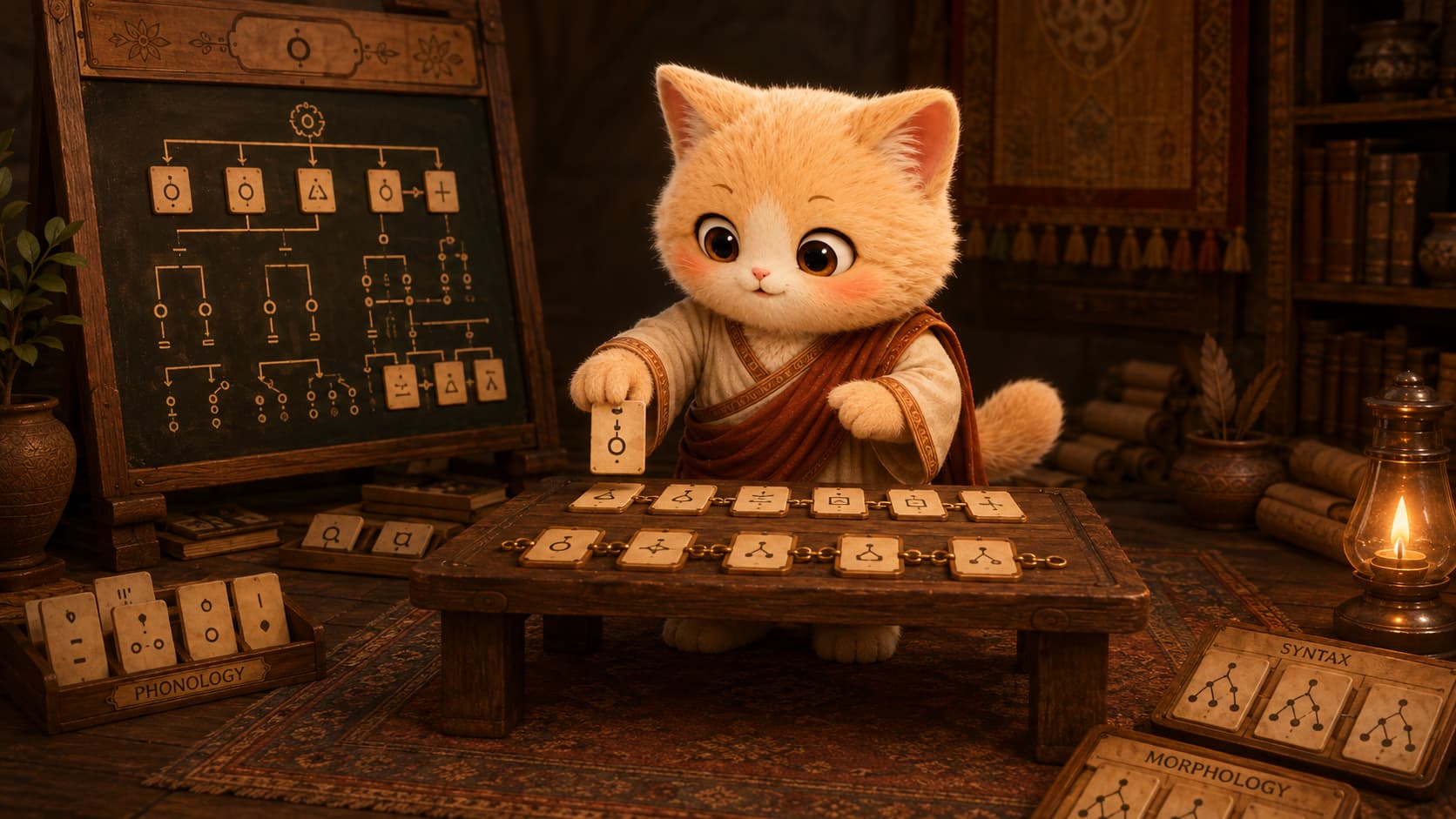
Panini Cat
Panini Cat studied how sounds, words, and sentences change, then described those changes through a precise set of connected rules. Later cats could use those rules to learn and analyze language.
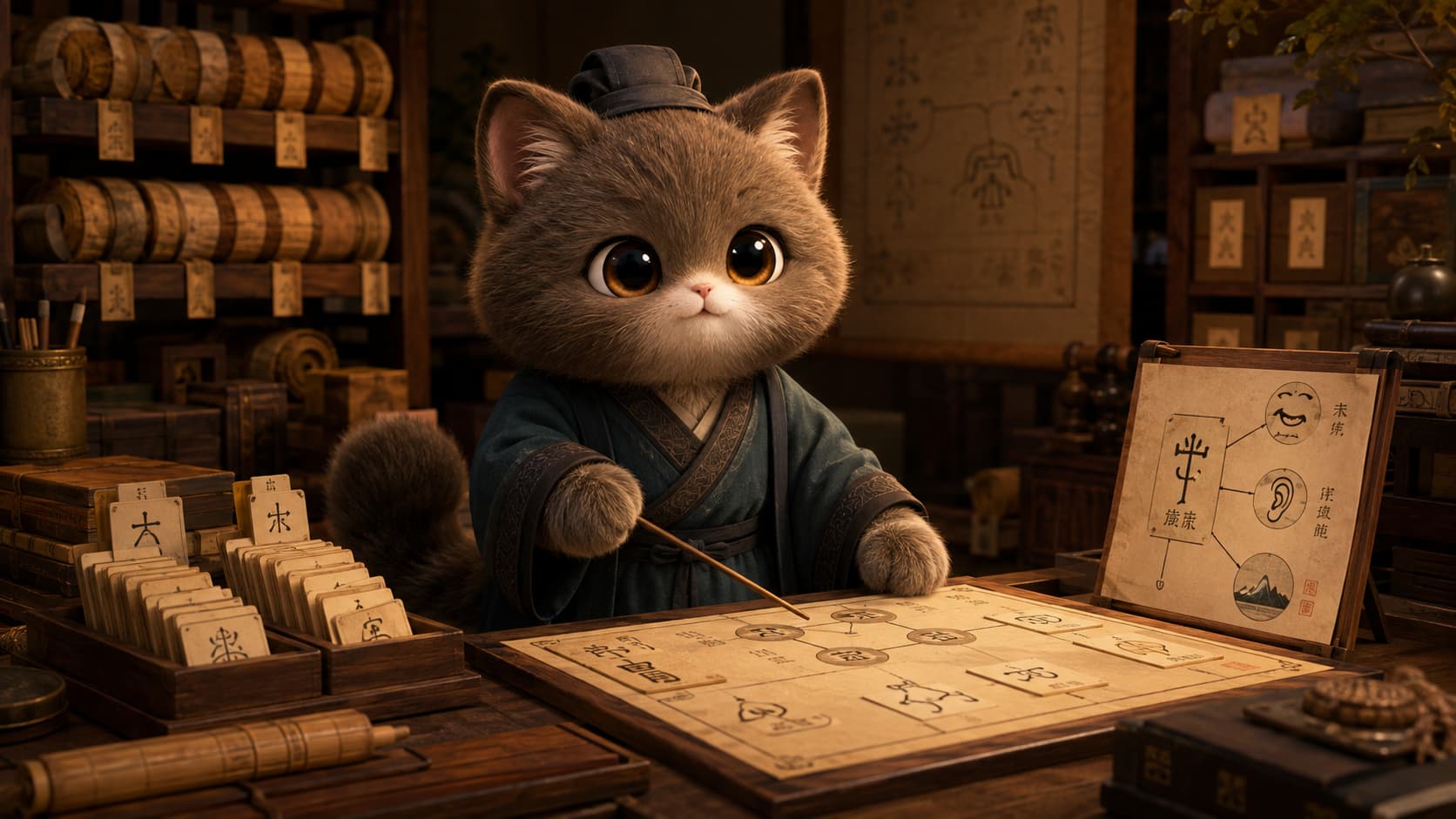
Xu Shen Cat
Xu Shen Cat grouped many written characters by shared forms and explained how they were written, read, and understood. His dictionary gave later cats a clearer way to find and compare characters.
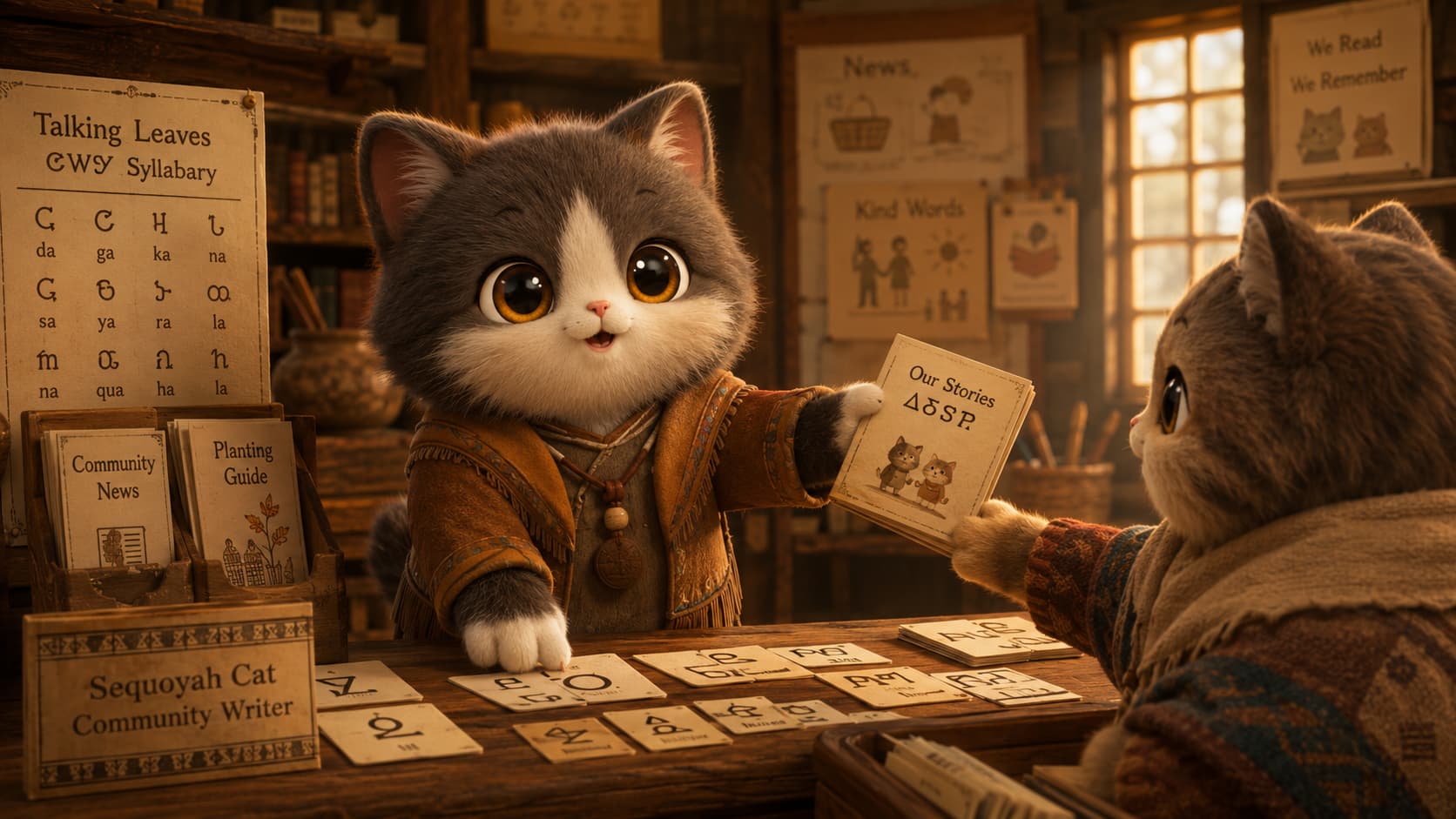
Sequoyah Cat
Sequoyah Cat designed a syllabary suited to the sounds of his community's language. Stories, news, and public affairs that had mostly been passed on by speech could now also be written and read.
How Knowledge Crosses Languages & Senses
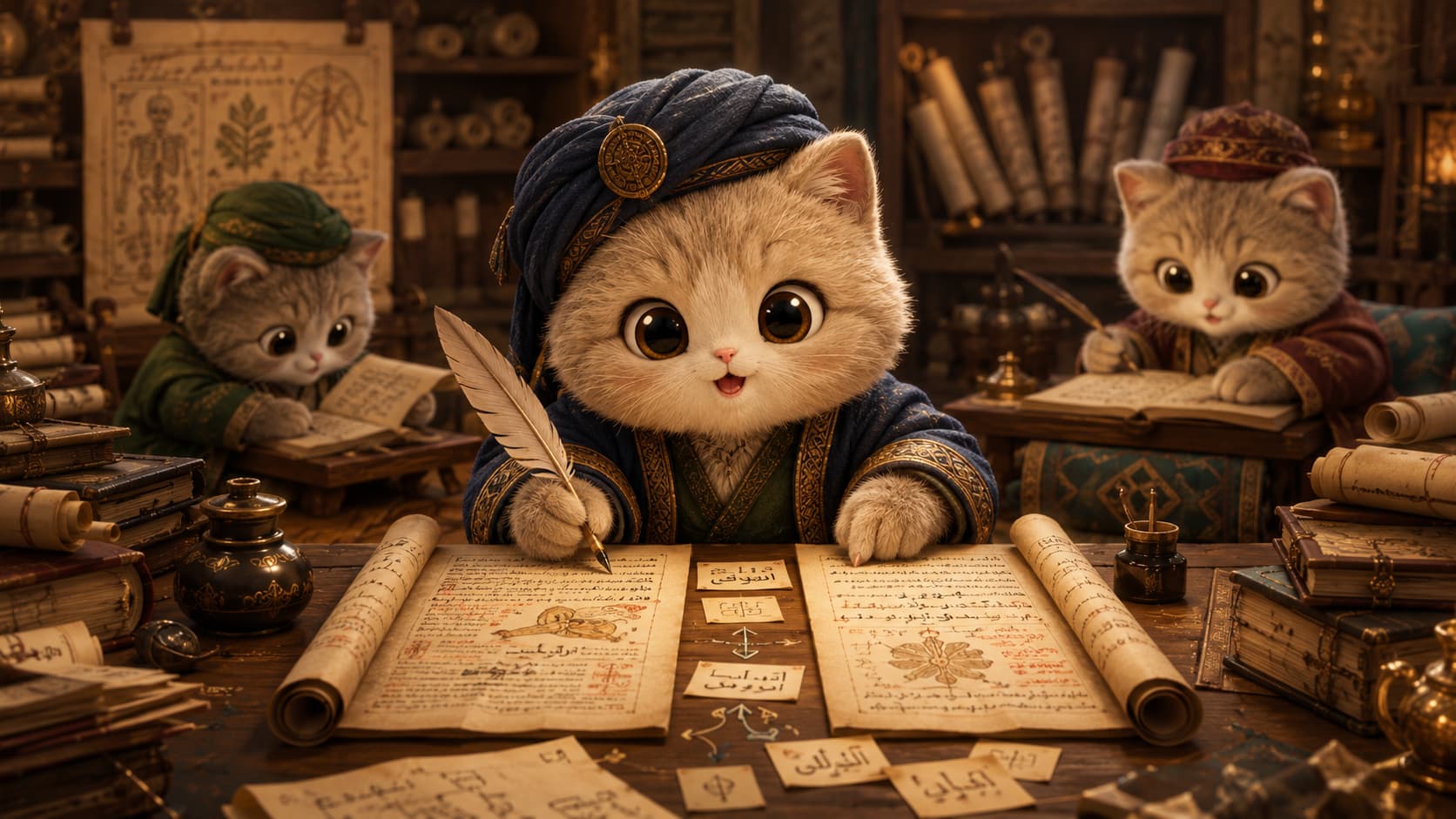
Hunayn ibn Ishaq Cat
Hunayn Cat and fellow translators compared manuscripts, worked out what the original text meant, and explained it again in another language. Translation is not replacing words one by one; it preserves understanding across languages.
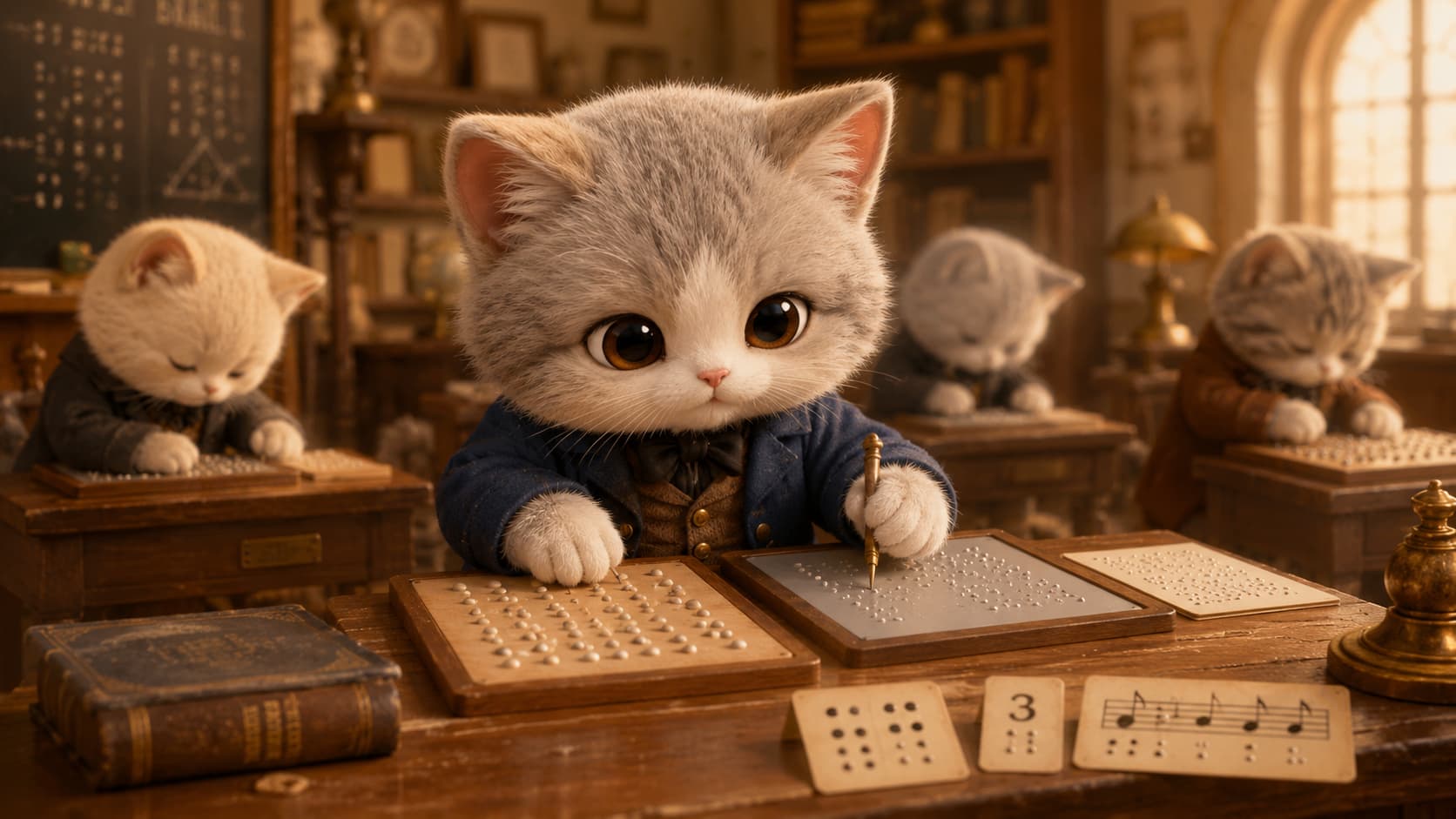
Louis Braille Cat
Braille Cat turned raised dots into a compact six-dot reading and writing system. Blind cats could read with their paws and write text, numbers, and music for themselves.
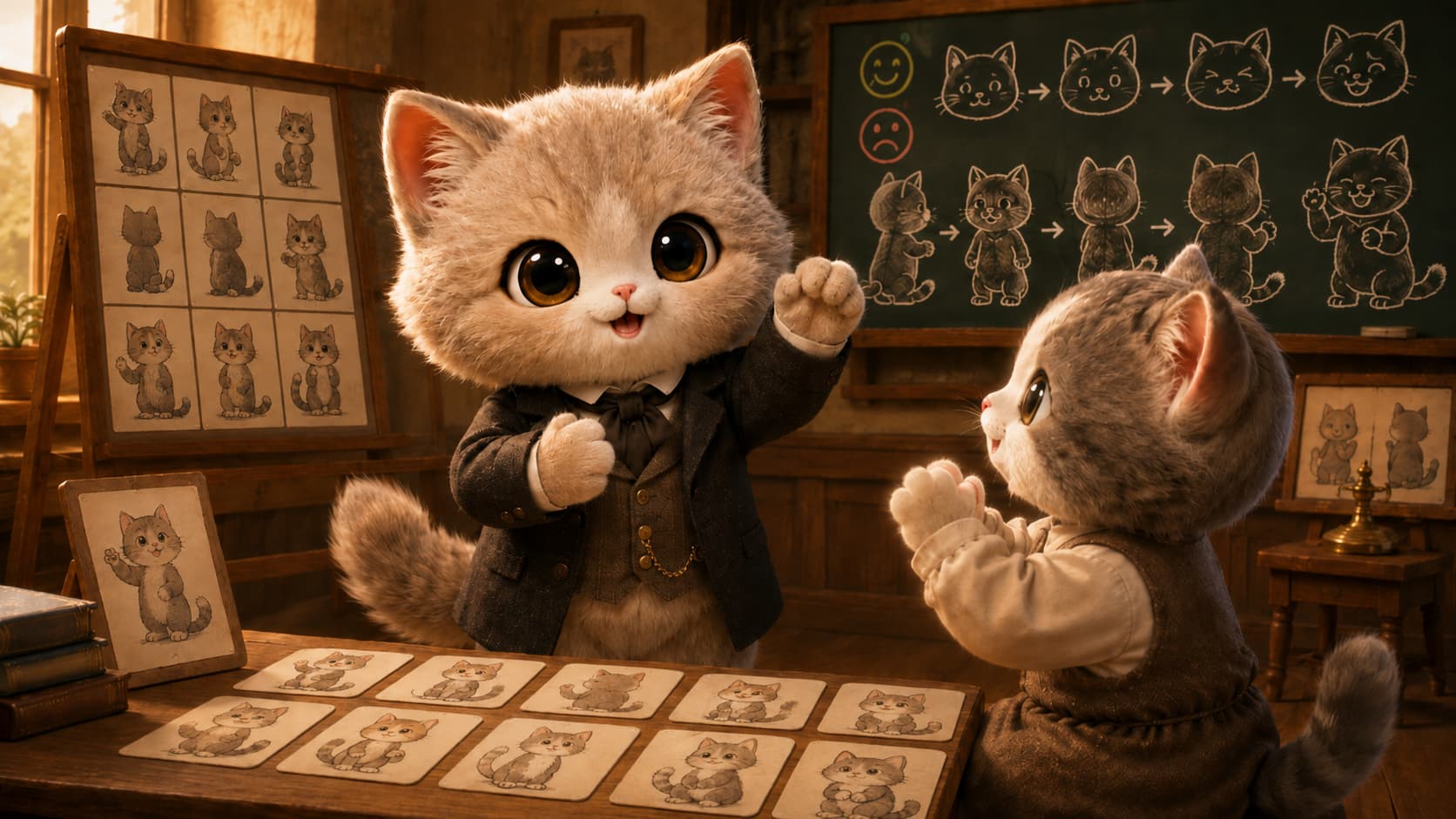
Laurent Clerc Cat
Clerc Cat helped bring visual language into lasting educational settings, allowing deaf cats to learn and communicate directly in their own language. Sign language is not incomplete speech, but a complete language.
Education That Respects Learners
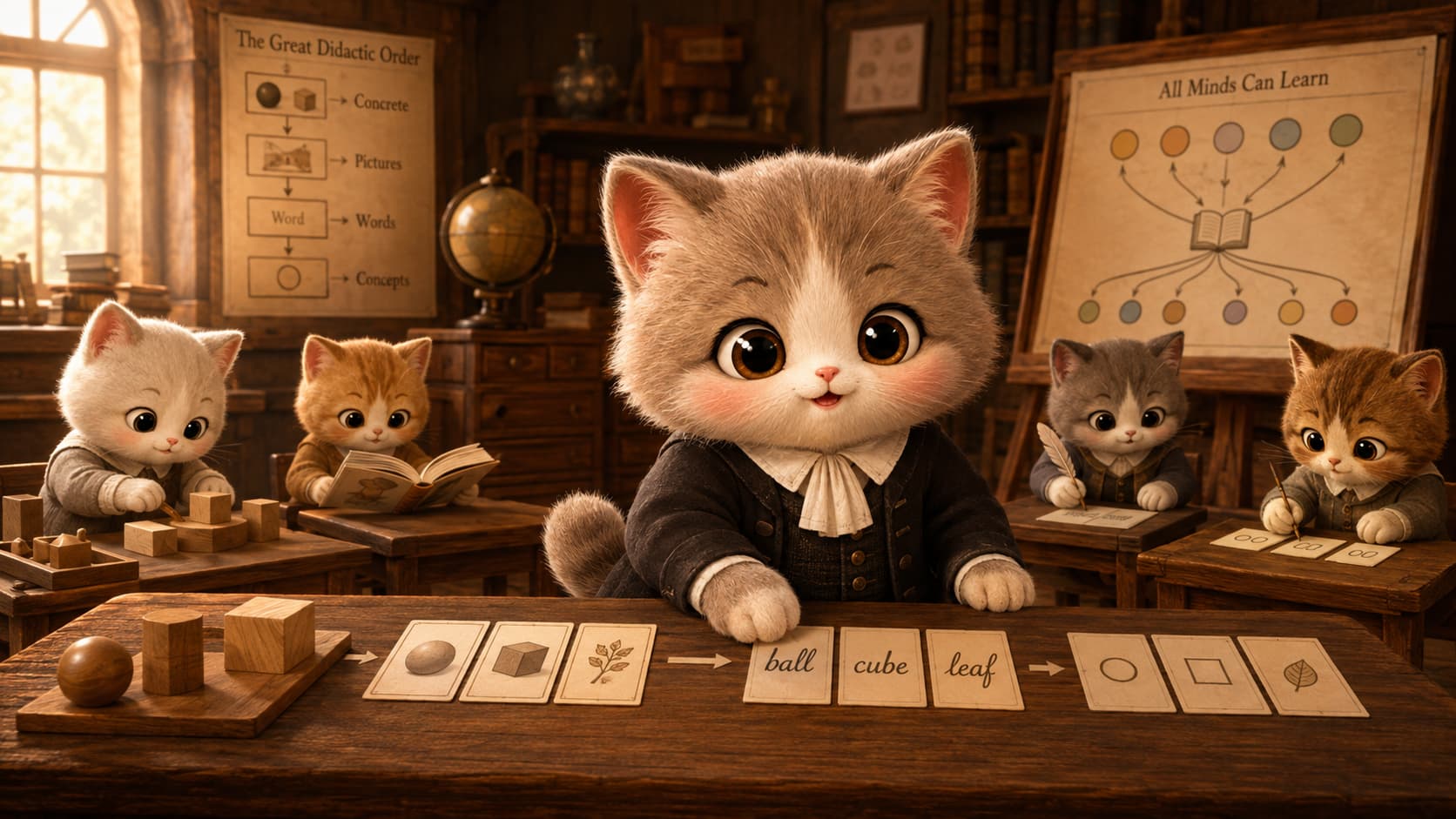
Comenius Cat
Comenius Cat organized lessons from simpler ideas to more difficult ones so teaching methods could be used by more teacher cats. Learning cats with different starting points gained a clearer first step into knowledge.
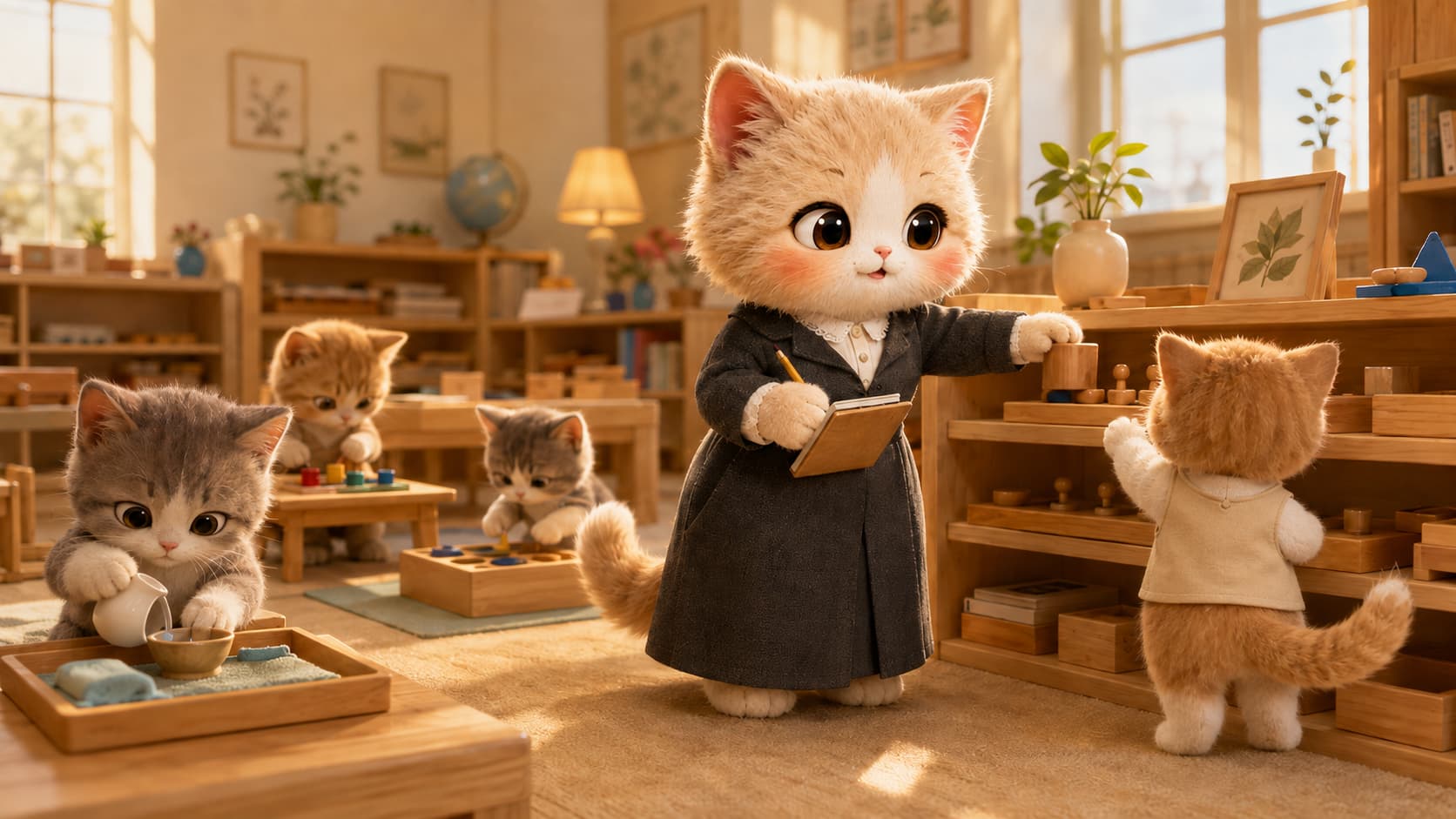
Maria Montessori Cat
Montessori Cat observed how kittens develop and prepared materials they could choose, handle, repeat, and correct for themselves. A teacher cat does not do everything for a kitten, but helps independent learning grow.
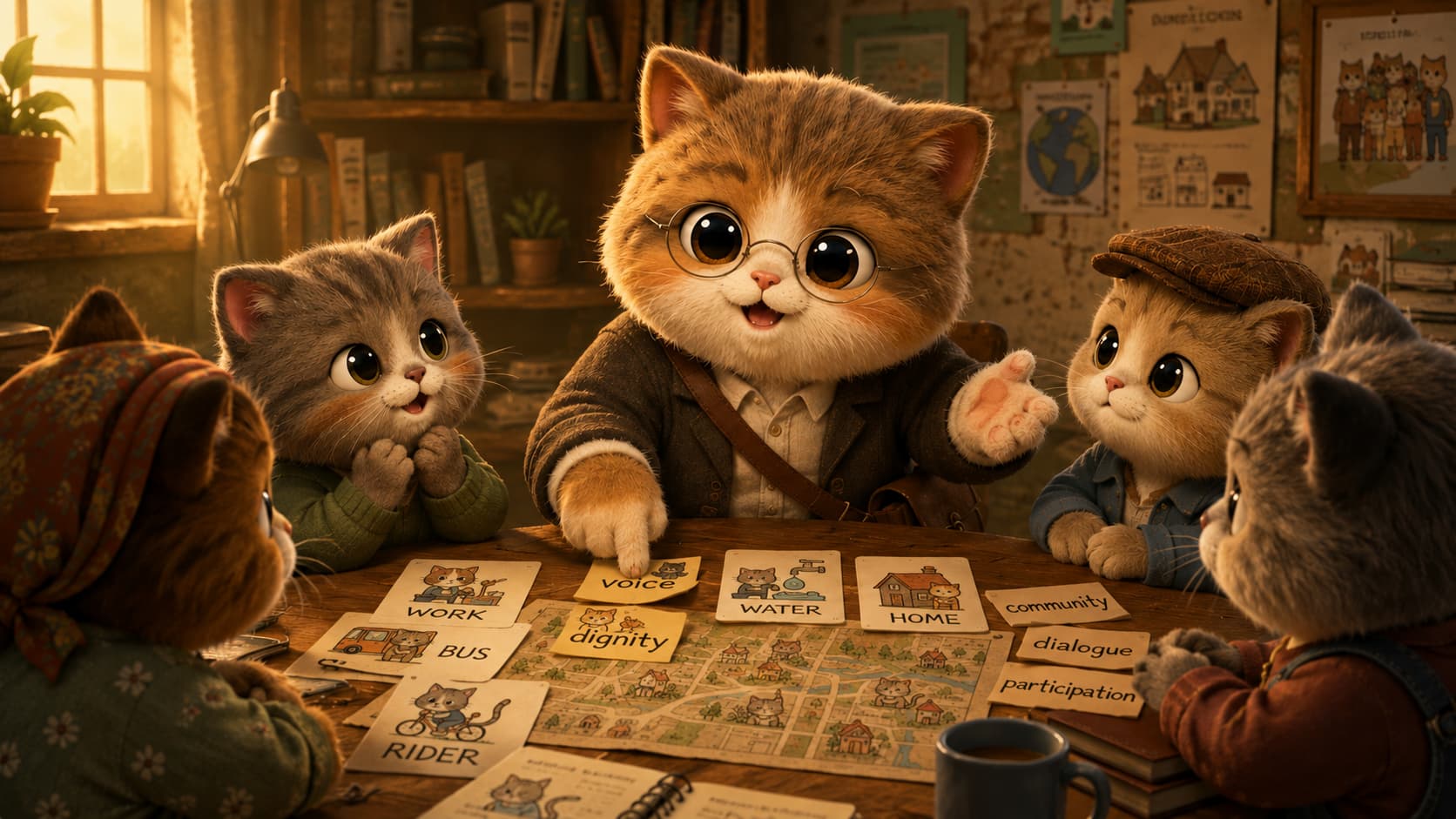
Paulo Freire Cat
Freire Cat connected literacy with the real experiences and questions of learning cats. Instead of simply depositing answers, teacher cats use dialogue to help learners understand words and take part in shared life.
How Civilization Is Copied, Organized & Remembered
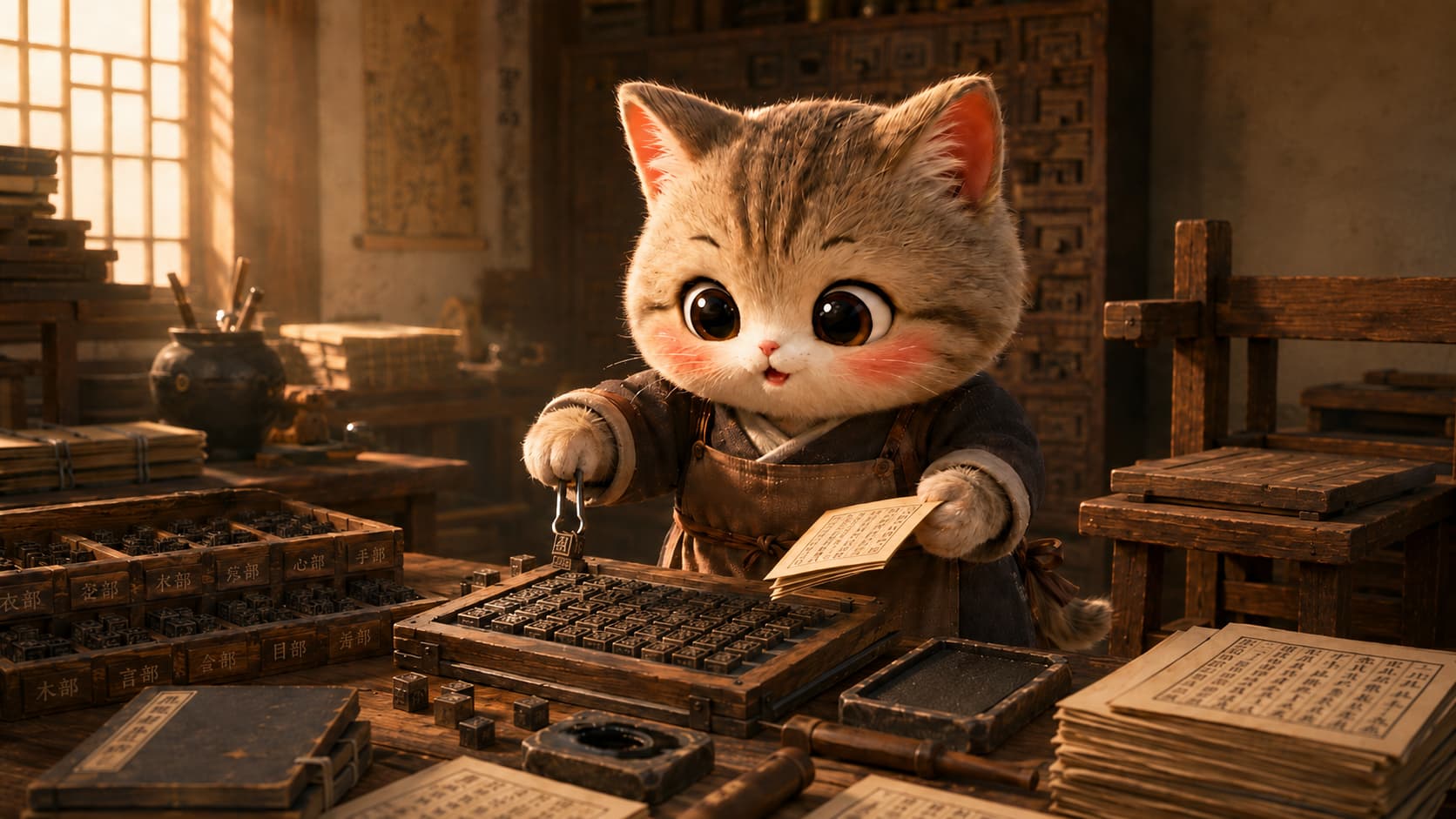
Bi Sheng Cat
Bi Sheng Cat made individual characters into reusable type that could be rearranged for different pages. Books gained another way to be copied and shared.
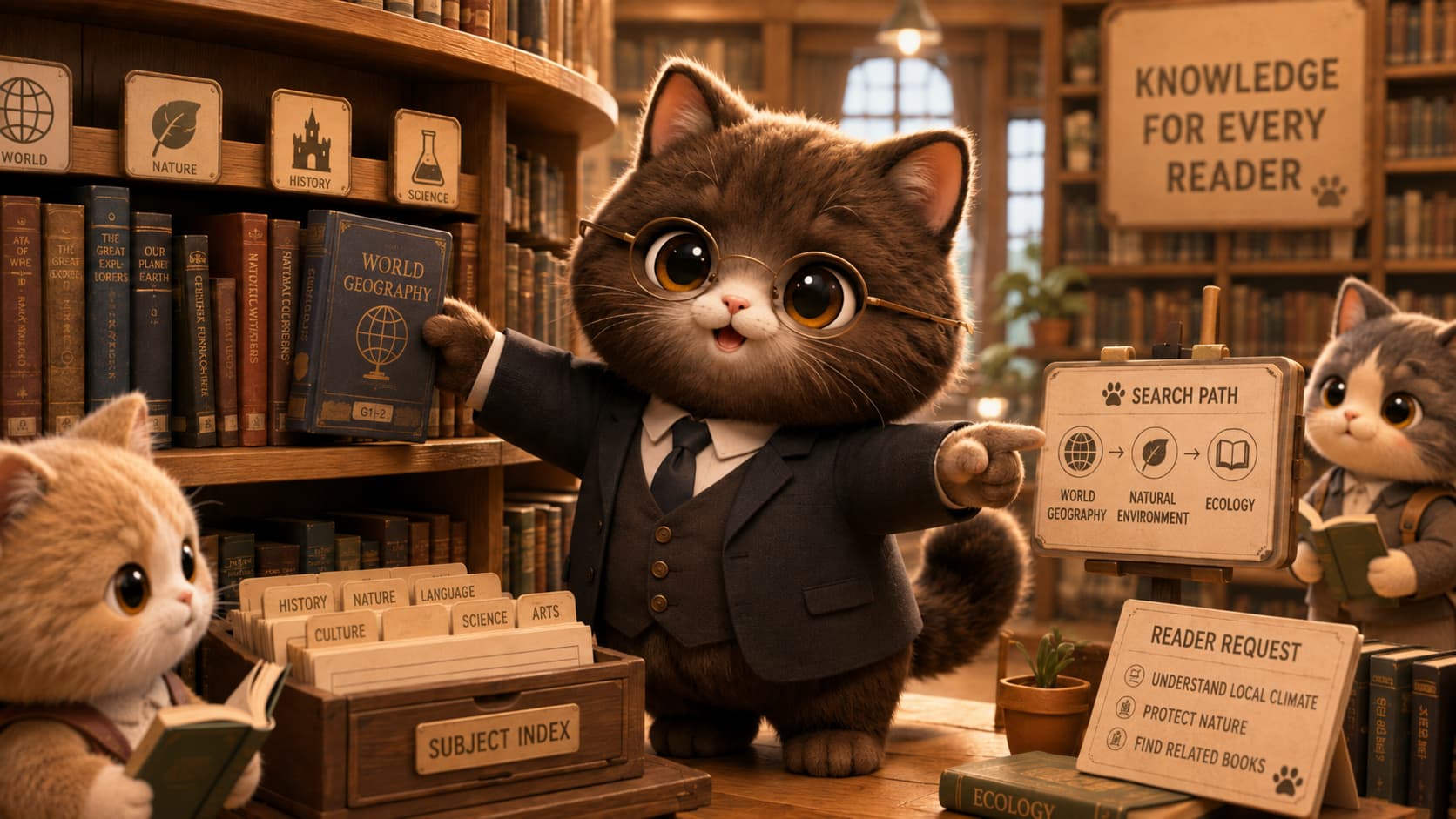
S. R. Ranganathan Cat
Ranganathan Cat treated a library as a growing path between books and readers rather than a warehouse that locks knowledge away. Preserved knowledge continues to live only when resident cats can find and use it.
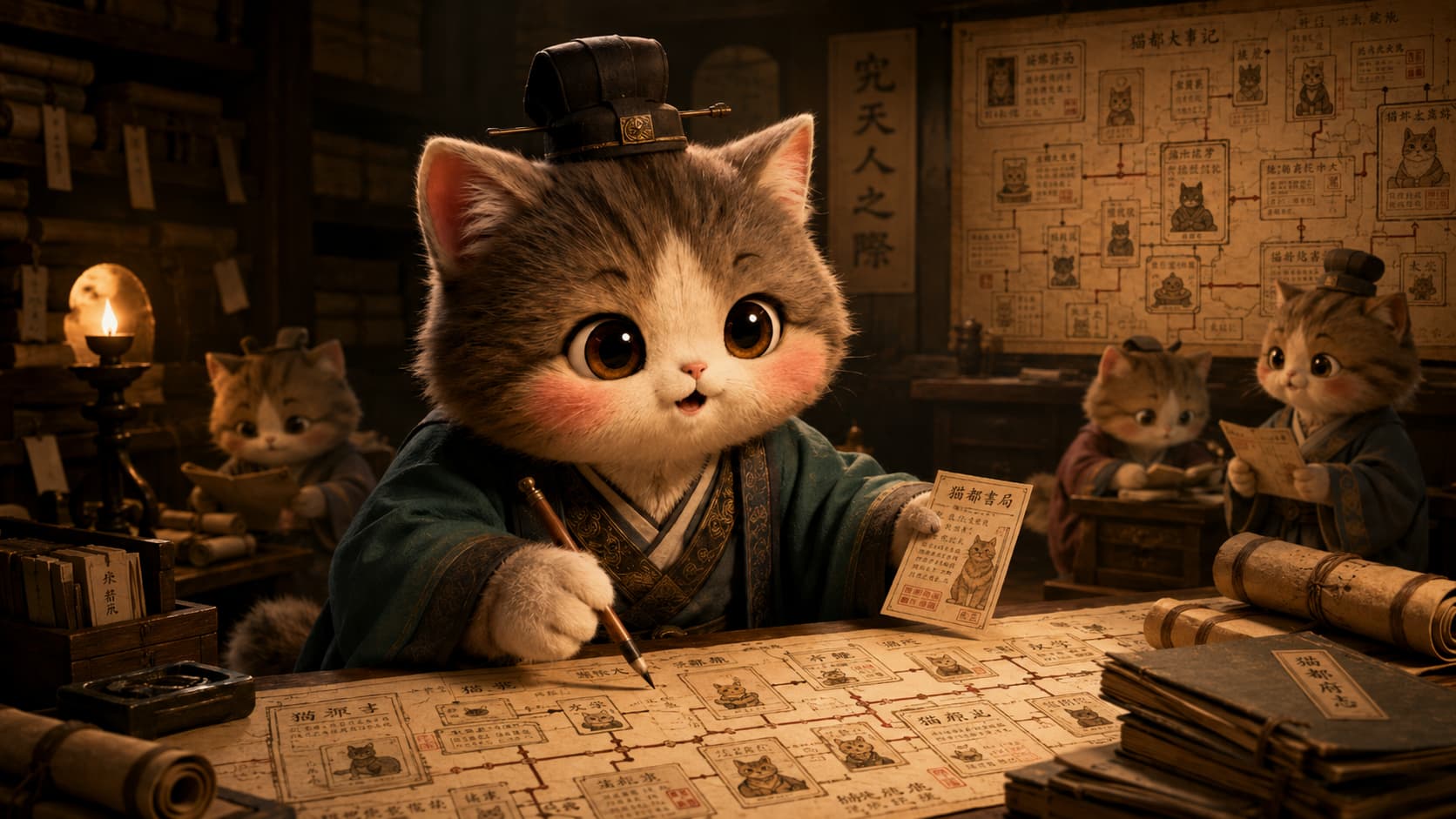
Sima Qian Cat
Sima Qian Cat arranged events, timelines, institutions, and the lives of different cats into a long historical record. Later cats could read the past, compare sources, and reconsider earlier judgments.